

Off-Page SEO: The Complete Guide for App Developers and SaaS Founders
June 1, 2026 | by Ian Adair
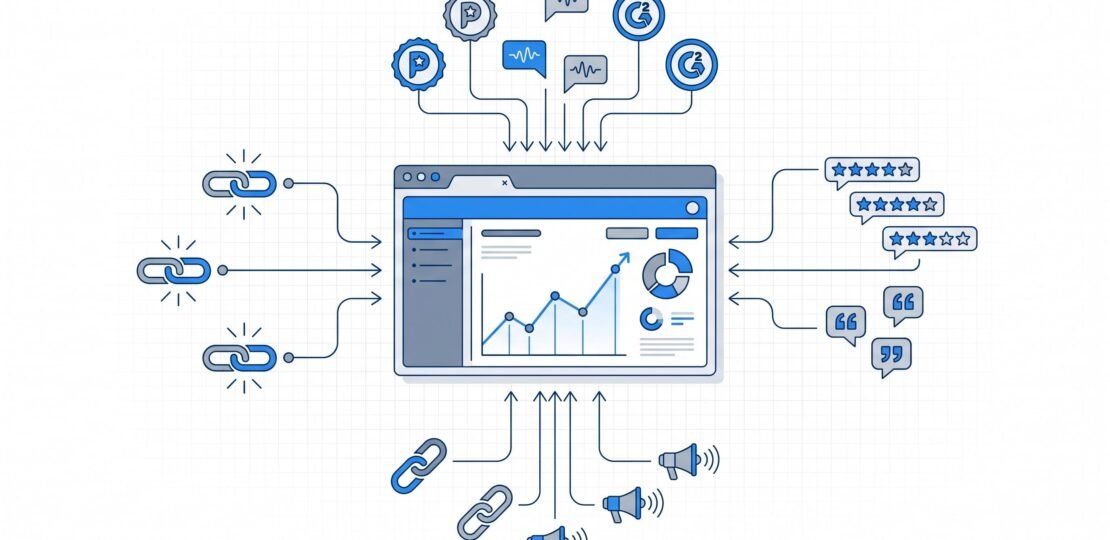
Off-page SEO is the set of activities you perform outside your own website to improve its search rankings, including link building, brand mentions, directory listings, and reviews. For web apps and SaaS products, off-page SEO carries extra weight because product pages contain less natural content than blogs, so external authority signals shape Google’s view of your site disproportionately.
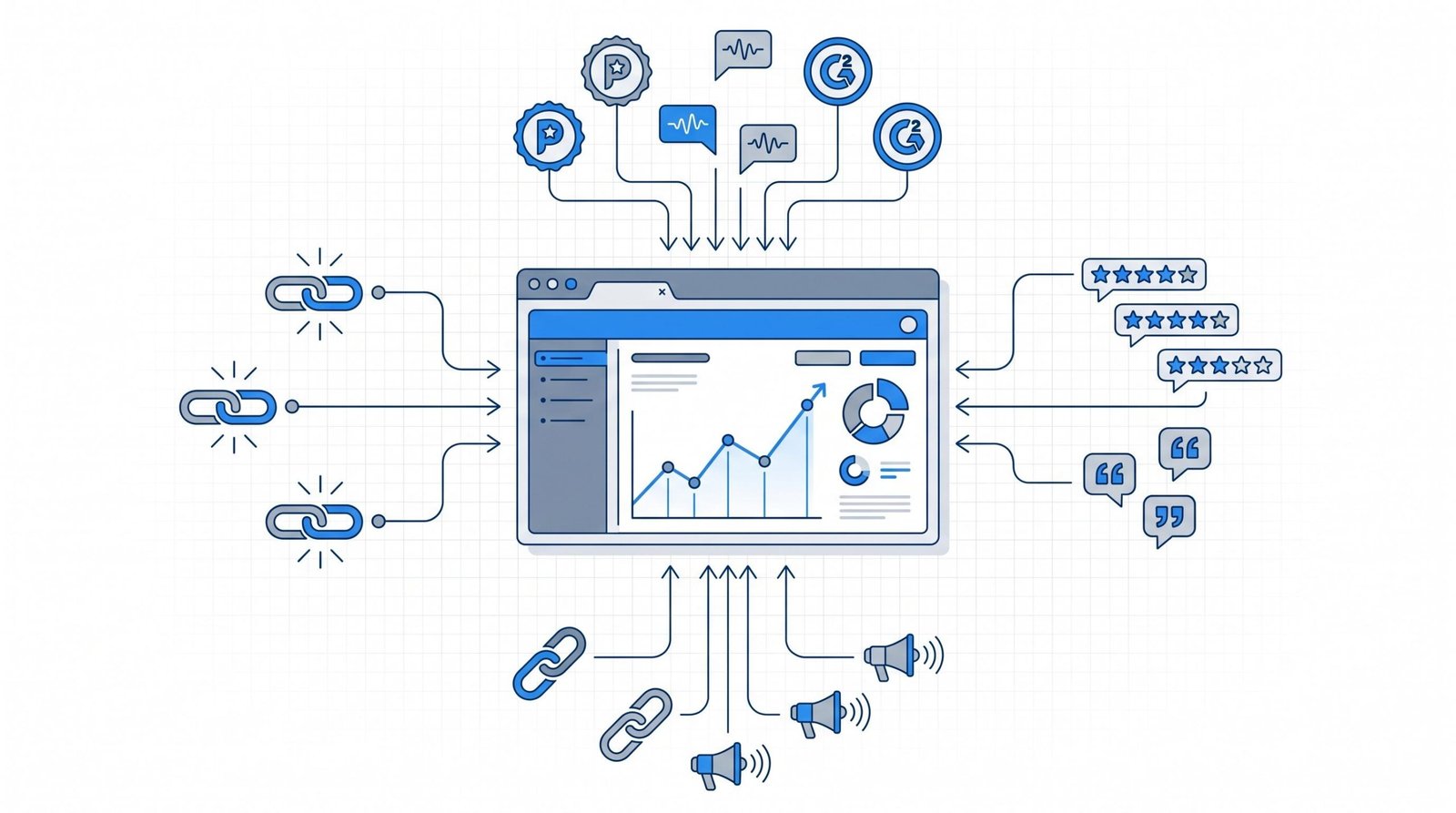
What Is Off-Page SEO?
Off-page SEO covers every ranking signal that lives outside the pages you control. When a developer links to your API documentation from a Stack Overflow answer, when G2 publishes a profile for your SaaS, when a podcast host mentions your tool in the show notes, when a Hacker News user submits your post to the front page, these are all off-page signals. Google reads them as third-party votes of confidence and uses them to decide how much authority your domain deserves.
This sits separately from on-page SEO, which is everything you do on the pages of your site itself: headings, copy, internal links, image alt text, structured data, and keyword targeting. On-page SEO answers the question “is this page relevant to the query?” Off-page SEO answers “is this site trustworthy enough to rank for the query?”
It also differs from a technical SEO audit, which inspects crawlability, indexing, Core Web Vitals, and structured data correctness. Technical SEO makes sure Google can read your site at all. On-page SEO makes individual pages relevant. Off-page SEO makes the whole domain authoritative. You need all three.
| SEO Type | What It Covers | Where It Happens | Impact Timeline |
|---|---|---|---|
| On-Page SEO | Content, headings, keyword targeting, internal links, schema | Your own pages | 2-8 weeks after publish |
| Off-Page SEO | Backlinks, brand mentions, reviews, directory listings, PR | Third-party sites and platforms | 3-9 months for meaningful lift |
| Technical SEO | Crawlability, indexing, site speed, mobile, structured data | Server, CDN, codebase, robots/sitemaps | Days to weeks once fixes ship |
Why Off-Page SEO Matters for Web Apps and SaaS
Google ranks pages, but it ranks them in the context of the site they live on. Two pages with identical content can rank wildly differently if one sits on a domain with 4,000 referring domains and the other sits on a six-month-old SaaS with twelve. The page on the trusted domain wins almost every time. That is off-page SEO doing its job.
Google’s Google’s helpful content guidelines spell out the four pillars Google uses to evaluate quality: Experience, Expertise, Authoritativeness, and Trustworthiness. Three of those pillars are mostly judged from outside your site. Authoritativeness is built almost entirely by external citations. Trustworthiness draws heavily on reviews and brand mentions. Expertise is signaled by where the author and the company show up across the web. For a SaaS product page, the question Google asks is essentially: who else on the internet treats this product as a credible solution in its category?
This is why on-page SEO alone hits a ceiling. You can write the perfect comparison page targeting “best Stripe alternative,” nail the title tag, structure your headings, and add FAQ schema, but if your domain has no off-page authority, you will sit at position 47 while a site with 200 referring domains ranks at position 3 with thinner content. The page is excellent; the site is unknown.
Web apps and SaaS products face a sharper version of this problem than content sites. A blog publishes 200 articles a year, each one a magnet for organic links. A SaaS product might have 12 marketing pages plus a docs section. The total content surface is smaller, which means external signals account for a proportionally larger share of the ranking equation. If you build software, your SEO for SaaS strategy has to allocate serious effort outside the site.
Core Off-Page SEO Signals
Link-Based Signals
Backlinks remain the single strongest off-page signal Google uses. A link from one site to another functions as a citation, and the structure of citations across the web forms the original graph PageRank was built to interpret. Google’s documentation on Google’s search ranking systems still describes link analysis as a foundational component of how relevance and quality get measured.
Not every link carries the same weight. Four attributes decide how much a single link actually moves the needle:
- Topical relevance. A link from a React tutorial site to your React component library transfers more authority than a link from a generic news site, even if the news site has higher domain authority on paper.
- Domain authority of the linking site. A single link from github.com or ycombinator.com can outweigh fifty links from low-quality blogs.
- Placement on the page. An editorial link inside the body of an article counts more than a link buried in a sidebar footer block that appears on every page of the site.
- Anchor text. Natural, descriptive anchors like “open-source React table library” carry semantic information. Generic “click here” anchors carry almost none.
Dofollow links pass PageRank directly. Nofollow links, since Google’s 2019 update, are treated as hints rather than directives, which means Google can still use them as ranking inputs. We suggest treating both as valuable. A nofollow link from Reddit or Hacker News still drives qualified referral traffic and contributes to brand mention signals even if the raw PageRank flow is reduced.
Non-Link Signals
Off-page SEO has expanded beyond pure link counting. Several non-link signals now factor into how Google evaluates a domain.
- Brand mentions. Both linked and unlinked mentions count. Google has filed patents covering “implied links,” where the search engine identifies a brand reference in text and credits it to the corresponding entity.
- Social signals. Direct social shares are not a ranking factor, but the secondary effects matter. A post that goes viral on Twitter or LinkedIn leads to journalists, bloggers, and developers writing about you, which produces actual backlinks.
- Reviews and ratings. For SaaS products, reviews on G2, Capterra, Trustpilot, and AlternativeTo function as trust signals. Google ingests these structured review datasets and pulls star ratings into rich snippets.
- App store ratings. For mobile apps, Apple App Store and Google Play ratings work as off-platform trust signals that Google’s web search also references when ranking pages about the app.
| Signal Category | Examples | Strength |
|---|---|---|
| Link signals | Editorial backlinks, resource page links, citations in docs | Primary off-page ranking factor |
| Non-link signals | Brand mentions, reviews, ratings, social discussion | Secondary but increasingly important for E-E-A-T |
Off-Page SEO Strategies for Web Apps and SaaS
Generic off-page SEO advice tells you to “build links.” That is correct but unhelpful. What follows is the playbook tuned to how app developers, SaaS founders, and indie builders actually earn off-page authority. None of these tactics require a PR agency or a five-figure budget.
1. Earn Backlinks Through Developer Content
Developers link to resources they reference, not resources you ask them to reference. The strongest backlink portfolios for SaaS companies are built on technical content that solves a specific engineering problem.
- Technical blog posts. Case studies, performance benchmarks, architecture writeups, and detailed tutorials get cited in Stack Overflow answers, internal engineering wikis, and conference talks. A single benchmark post comparing database query performance across five providers can pull in dozens of links over a year as readers cite the numbers.
- Open-source releases. Every fork carries a link back. Every package on npm or PyPI includes a homepage URL. A React component library or a CLI tool that gains traction on GitHub generates passive backlinks every time a developer adds it to a project README.
- API documentation and SDK guides. When developers integrate your API, their tutorials, sample apps, and blog posts almost always link to your docs. Quality documentation is a link asset disguised as a support page.
- GitHub README as a link asset. A well-structured README with a clear value proposition, badges, code samples, and links to your site captures developers in the moment they decide to use your product. It also becomes the canonical reference other developers copy.
Consider a concrete example: a React component library released as open source under MIT license, published with full TypeScript types and a clean Storybook. Over its first year, the library can earn 500 organic backlinks from developer blogs, tutorial sites, and project READMEs without a single outreach email being sent. The team’s effort goes into code and docs, not link building, but the link building happens anyway as a downstream effect of being useful.
2. Get Listed in SaaS and App Directories
Directory listings are the single most overlooked off-page tactic for SaaS. Each profile gives you a citation, often a backlink, and a listing that AI search engines and human comparison shoppers will both reference.
- Product Hunt. A successful launch earns you a permanent profile, social distribution, and often coverage from secondary tech press. Time the launch for Tuesday through Thursday at 12:01 AM Pacific. Prepare a punchy tagline under 60 characters, a thumbnail that reads at small sizes, three to five product screenshots, and a launch video under 30 seconds. Coordinate hunters and supporters in advance; do not buy upvotes.
- G2 and Capterra. Claim your profile, fill every field, and ask satisfied customers to leave verified reviews. These platforms feed AI search engines like Perplexity and Google’s AI Overviews when users ask category questions.
- Trustpilot and AlternativeTo. Trustpilot covers general consumer trust signals. AlternativeTo is the canonical site for “alternatives to X” queries, which puts you in front of high-intent users actively shopping in your category.
- Indie Hackers. The platform runs on the ycombinator.com domain, which carries substantial domain authority. A product profile and active participation in the community generate compounding signals over time.
- Vertical-specific directories. BetaList for early-stage launches, SaaS Hub for general SaaS, There’s An AI For That and Futurepedia for AI tools, AppSumo for lifetime-deal products. Each gives you one more citation in your category’s reference set.
Many of these links are nofollow. That does not make them worthless. Google explicitly treats nofollow as a hint, and these citations build the brand-mention graph that AI search systems crawl when they assemble answers.
3. Build Developer Community Presence
Developer communities are off-page SEO at their core: third-party platforms where your product, brand, and expertise show up in front of qualified audiences.
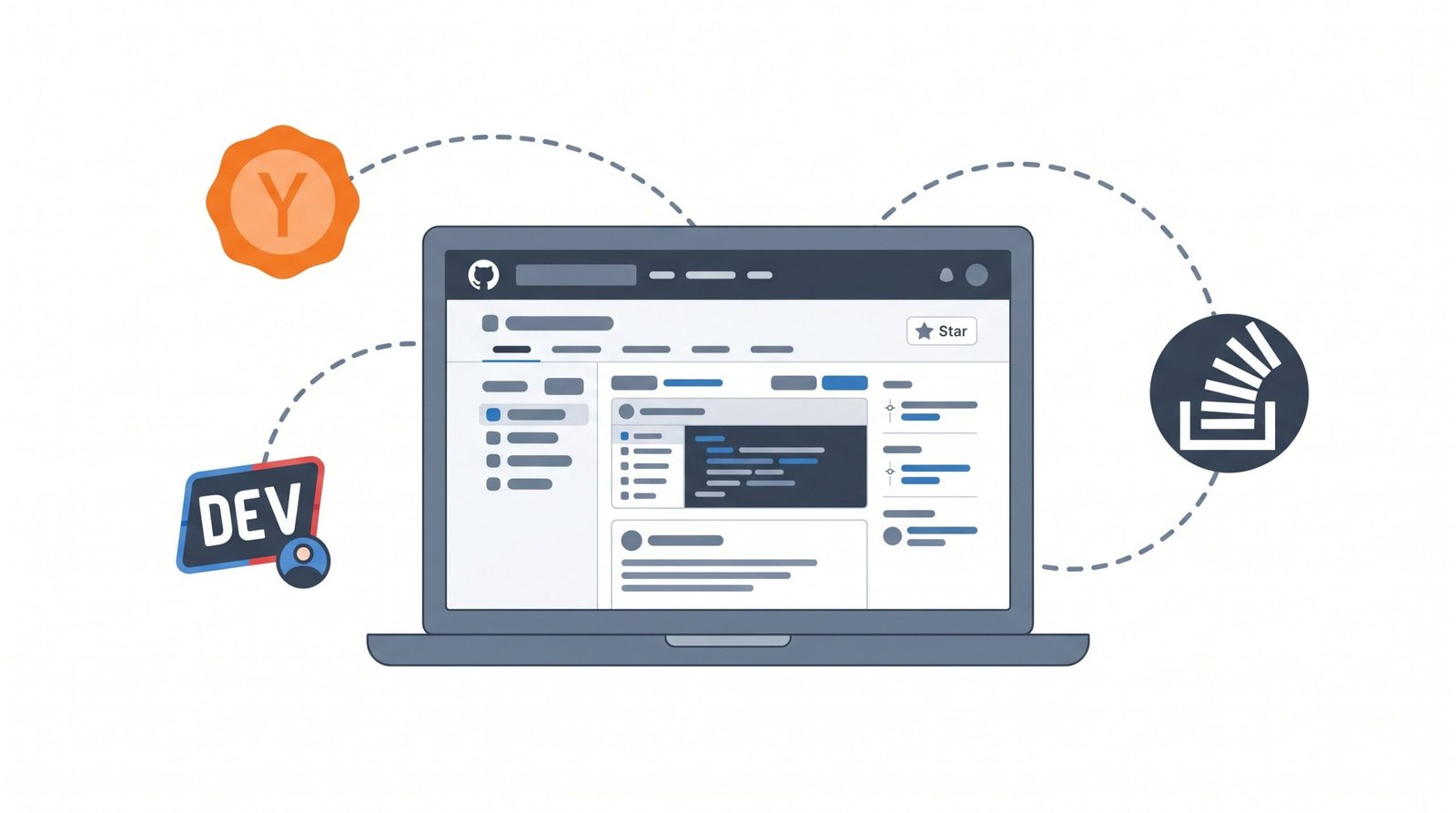
- Hacker News “Show HN” posts. The ycombinator.com domain has top-tier authority. A successful Show HN front-pages and gets archived in search results for years. Lead with what the product does, link to a working demo, and respond to every substantive comment within the first hour.
- Dev.to articles. Republish your technical posts on Dev.to with the canonical URL pointing back to your domain. You keep the link equity at the source, gain a high-authority profile link, and reach a developer audience that may discover and link to your product.
- Stack Overflow. Answer questions in your product’s technical domain. Build a profile with a link to your site. Do not paste your product into unrelated answers; the moderators will flag self-promotion and you will lose more than you gain.
- GitHub Discussions and open-source sponsorship. Sponsoring well-known maintainers earns you a profile link on their sponsor page. Active participation in adjacent open-source projects builds the kind of reputation that turns into editorial backlinks down the road.
4. Guest Posting for Developers and Founders
Guest posting still works when you target publications that share your audience. The trick is picking outlets where the bar is editorial, not pay-to-play.
- Dev-adjacent publications. Smashing Magazine, LogRocket blog, CSS-Tricks, Hackernoon, and freeCodeCamp accept technical contributions from practitioners. Pitch a tutorial that solves a real problem, not a thinly veiled product pitch.
- Indie Hackers community posts. Detailed founder stories, growth experiments, and revenue breakdowns consistently outperform on Indie Hackers. The platform rewards specificity, so share real numbers and the lessons behind them.
- Podcast appearances. Most developer and founder podcasts include show notes with a guest bio and link. Pitch shows in your category with a specific angle, not a generic “I’d love to come on the show.” Reference an episode you actually listened to.
- Developer newsletters. The Pragmatic Engineer, TLDR, Pointer, Bytes, and JavaScript Weekly drive substantial referral traffic when they cover a tool. They cover things that are genuinely useful; the link is a side effect of being interesting.
5. Digital PR for Apps
Digital PR is journalist outreach with a product hook. SaaS founders consistently undervalue this channel because it feels expensive, but most coverage comes from cold pitches with a clean angle, not from retained agencies.
- Tech press targets. TechCrunch covers funding rounds, acquisitions, and category-defining product launches. The Next Web and Betakit have lower bars for emerging SaaS coverage. SiliconAngle, ZDNet, and VentureBeat cover enterprise SaaS milestones.
- Journalist request platforms. Sites like Help A B2B Writer, Qwoted, and Featured.com let reporters request expert sources. Respond fast with specific quotes and you will land coverage that includes a backlink and a credibility signal.
- App review sites. Android Authority, 9to5Mac, MacStories, and Sensor Tower’s blog cover mobile apps. Pitch with a free press copy of the paid app and a clear hook about what is new.
- Press-ready milestones. Save coverage moments for genuine news: your first 1,000 paying users, an open-source release, a major model upgrade, a Series A, a strategic partnership. Quiet weeks should not generate press pitches.
6. App Store Reviews and Ratings (for Mobile Apps)
Mobile apps live inside a dual ranking system. Apple and Google rank your app inside their stores using App Store Optimization signals. Google web search ranks pages about your app using off-page signals that include those same store ratings. The two systems feed each other. The fuller picture lives inside our guide to SEO for mobile apps.
Ratings and reviews function as trust signals across both layers. A 4.7-star app with 50,000 reviews gets surfaced more prominently in store searches, ranks higher on third-party app aggregator sites, and earns more editorial mentions, all of which feed back into web search authority.
Encourage reviews ethically by timing in-app prompts after a positive user moment, such as completing an action, hitting a milestone, or finishing a streak. Never prompt during error states or paywall friction. Respond to every negative review within 48 hours. Public, thoughtful responses to criticism signal product care to both users and the platform algorithms that weight engagement.
| Signal | iOS App Store | Google Play |
|---|---|---|
| Average rating weighting | Recent ratings weighted heavier than historical | Lifetime rating with recency adjustment |
| Review prompt frequency | Limited to 3 prompts per 365 days per user | Limited via In-App Review API, controlled by Google |
| Developer responses | Visible publicly; affects ranking signals | Visible publicly; user notified of response |
| Featured placement criteria | Rating, engagement, App Store guidelines compliance | Rating, engagement, install-to-uninstall ratio |
7. Brand Mentions (Linked and Unlinked)
Every time someone writes your brand name on the web, Google reads it as a co-citation signal. Unlinked mentions still count, especially when they appear on relevant sites alongside your category keywords. This is one of the lowest-effort wins in off-page SEO because the work is already done; you just need to find the mentions and, where possible, convert them into links.
Set up Google Alerts for your brand name, product name, founder names, and common misspellings. For free tracking beyond Alerts, services like Talkwalker Alerts and Mention’s free tier surface broader coverage. When you find an unlinked mention, send a short email:
“Hey [name], thanks for the kind mention of [product] in your post on [topic]. Small ask: any chance you’d be open to linking the product name to our site? Here’s the URL: [URL]. Either way, really appreciate the write-up.”
Conversion rates on this kind of outreach typically run 30 to 50 percent because the writer has already done the hard part. They like you enough to mention you; adding a hyperlink is a 10-second edit.
Link Building Fundamentals for Developers
What makes a single link genuinely valuable comes down to four factors that compound: topical relevance to your category, the linking domain’s authority, the placement inside the page, and the anchor text used. A link from a top-tier React tutorial site, in the body of an article about state management, with the anchor “Redux alternative for React” pointing to your library, is worth hundreds of low-relevance footer links.
Several tactics work well specifically for developer tools and SaaS products:
- Broken link building. Use Ahrefs or a free alternative like Linkminer to find broken outbound links on developer resource pages. Reach out with a short note: the page links to a dead resource, your tool or guide is a current replacement, would they consider updating the link?
- Resource page link building. Search for queries like “best React libraries,” “best DevOps tools,” “best monitoring SaaS.” These curated pages exist by the thousand. If your product fits, pitch a one-line addition with a sentence of context.
- Competitor backlink analysis. Run your three main competitors through a backlink checker. Filter for editorial mentions and resource pages. Any site that links to two or more competitors is a high-probability target for you too.
- Creating linkable assets. Free tools earn links by being useful. Performance calculators, API playgrounds, AI prompt libraries, free version generators, open datasets, and benchmark comparisons all pull organic backlinks at scale. A free “GitHub README generator” can earn thousands of natural links from developers who use it, completely outside any outreach campaign.
One non-negotiable: do not buy links. Google’s Google’s link spam policies explicitly prohibit paid links that pass PageRank, and detection has gotten substantially better since the SpamBrain updates. Penalties range from devaluation of the specific links to full manual actions that can take a domain out of search results for months. The risk-adjusted return on paid links is deeply negative.
Off-Page SEO vs On-Page SEO: What Is the Real Difference?
The most useful way to think about these two disciplines is multiplication, not addition. On-page SEO sets a base score for the page. Off-page SEO multiplies that score by your domain’s authority. A perfect on-page page on a weak domain still ranks poorly. A weak page on a strong domain can still rank because the multiplier carries it.
| Dimension | On-Page SEO | Off-Page SEO |
|---|---|---|
| Definition | Optimizations applied directly to your own web pages | Signals generated by third parties pointing back to your site |
| What it optimizes | Page relevance, content quality, structure, keyword targeting | Domain authority, brand trust, citation strength |
| Where work happens | Inside your CMS, codebase, and content workflow | Outreach, PR, community engagement, directory submissions |
| Typical timeline | 2 to 8 weeks for indexing and ranking impact | 3 to 9 months for measurable authority gains |
| Example tactic | Add FAQ schema to a comparison page | Get your product listed on Product Hunt and G2 |
The common developer mistake is spending 100 percent of SEO effort on technical and on-page work because those are the parts engineers can control through code. Off-page feels squishy, slower, and harder to attribute, so it gets deferred. Six months later the founder wonders why their flawlessly optimized SaaS marketing site sits at position 30 while a less polished competitor ranks at position 2. The competitor invested in off-page signal while the engineer was tuning robots.txt.
The fix is to allocate explicit time to off-page work from launch week one. The exact split depends on the stage. For a new SaaS launching its first marketing site, we suggest something like 30 percent on-page, 20 percent technical, and 50 percent off-page in the first six months. After the first 100 referring domains are established, the mix can shift toward content and on-page optimization.
GEO: Off-Page SEO for AI Search
Generative Engine Optimization is the off-page work of getting your product cited inside AI-generated answers. Perplexity, ChatGPT web search, Claude with web access, Google’s AI Overviews, and Bing’s Copilot all assemble answers by reading authoritative sources and citing them. Your product either appears in those citations or it does not. The mechanics of how it gets there are downstream of classic off-page SEO with one new twist: AI systems weight structured comparison sources heavily.
When a user asks an AI tool “what are the best monitoring tools for Node.js apps?” the assistant pulls from a small set of high-trust sources: G2 category pages, Capterra rankings, Reddit threads with high upvotes, comparison blog posts on authoritative domains, and the comparison sections of well-known developer publications. If your product appears across enough of these references, the AI will list it. If it does not, you are invisible in this fast-growing channel.
The practical GEO playbook for SaaS:
- Get on G2, Capterra, and AlternativeTo. AI tools heavily reference these for software category questions.
- Publish authoritative documentation. AI systems treat docs sites as canonical references for how a product actually works. Detailed, accurate, frequently updated docs increase the probability of being quoted.
- Earn coverage in developer newsletters and roundups. “Best X tools” articles on high-authority domains are direct training inputs for the comparison reasoning AI systems use.
- Encourage Reddit and community discussion. Genuine threads in relevant subreddits with positive sentiment frequently surface as cited sources.
A concrete example: a developer-focused error tracking SaaS gets listed in 20 SaaS directories (G2, Capterra, AlternativeTo, Product Hunt, Indie Hackers, BetaList, plus 14 niche tool directories) and appears in 10 blog roundups about error monitoring. When a user asks Perplexity “what’s the best error tracking tool for Node.js startups?”, the citation set the model pulls from now overlaps with this product in eight distinct references. The AI lists it among the top picks. The same product without those citations would not appear at all.
Common Off-Page SEO Mistakes App Builders Make
Most off-page SEO failures cluster around a small set of repeating mistakes. Naming them helps you avoid them.
- Buying links. Whether through link networks, “guest post for $200” services, or paid placements on questionable sites, this violates Google’s link spam policies and increasingly triggers algorithmic devaluation. The cheap version is wasted budget; the expensive version is wasted budget plus risk of a manual penalty.
- Obsessing over volume instead of relevance. A hundred links from unrelated sites move the needle less than three editorial links from publications in your category. Sort your link prospects by topical fit and domain authority, not raw counts.
- Ignoring unlinked brand mentions. Free authority sitting on the table. Set Google Alerts for your brand and convert at least the easy wins each month.
- Skipping SaaS directory listings. This is the single most common gap for app builders. Most founders submit to Product Hunt and stop there. The other 30 to 50 relevant directories quietly compound for the competitors who do submit.
- Treating social media shares as direct ranking signals. They are not. The value of social distribution is downstream: traffic, discovery, eventual coverage. Stop measuring tweet shares as an SEO KPI.
- Expecting results in under 90 days. Off-page signals compound slowly. Most authority gains show up in months four through nine for a new domain. The teams that win are the ones that keep working while the dashboard looks flat.
How to Measure Off-Page SEO Progress
Off-page SEO has a small set of metrics worth tracking. Over-measuring is a common trap, especially for engineers who want a real-time dashboard for a slow-moving signal.
- Referring domains. The number of unique domains pointing at your site. This is the single most important number. Total backlinks can balloon from one site placing 50 sitewide links; referring domains cuts through that noise.
- Domain Rating or Domain Authority. Ahrefs publishes DR, Moz publishes DA, both on a 0 to 100 logarithmic scale. Track the trend, not the absolute number.
- Organic impressions growth. Pulled from Google Search Console, this is the truest leading indicator of off-page work paying off. As authority compounds, your pages start ranking for more queries and accumulating more impressions before clicks catch up.
- Backlink velocity. The rate at which new referring domains accrue per month. A healthy SaaS in growth mode adds 10 to 40 new referring domains monthly through the strategies in this guide.
For tooling, Google Search Console is free and authoritative. It shows impressions, clicks, queries, and the pages Google considers important on your site. For backlink analysis, the free tiers of Ahrefs Webmaster Tools, Moz Link Explorer, and Ubersuggest cover most needs in the first year. Our list of the best SEO tools compares them across price points and features for app builders specifically.
For tracking cadence, monthly is the right rhythm. Daily backlink checks are noise; weekly is fine if it keeps you motivated; monthly is when the actual trend becomes visible. What “good” progress looks like for a new SaaS in its first 90 days:
- Day 30: 5 to 15 referring domains. Product Hunt launch complete, three to five SaaS directory profiles claimed, first technical blog post published, Google Search Console set up and verified.
- Day 60: 15 to 35 referring domains. Show HN attempt made, 10 directory profiles claimed, two guest posts pitched, one podcast appearance booked.
- Day 90: 30 to 70 referring domains. First measurable organic impression growth in Search Console, brand mention conversion outreach generating one to three new links per month, first targeted resource page outreach.
Off-Page SEO Checklist for App Builders
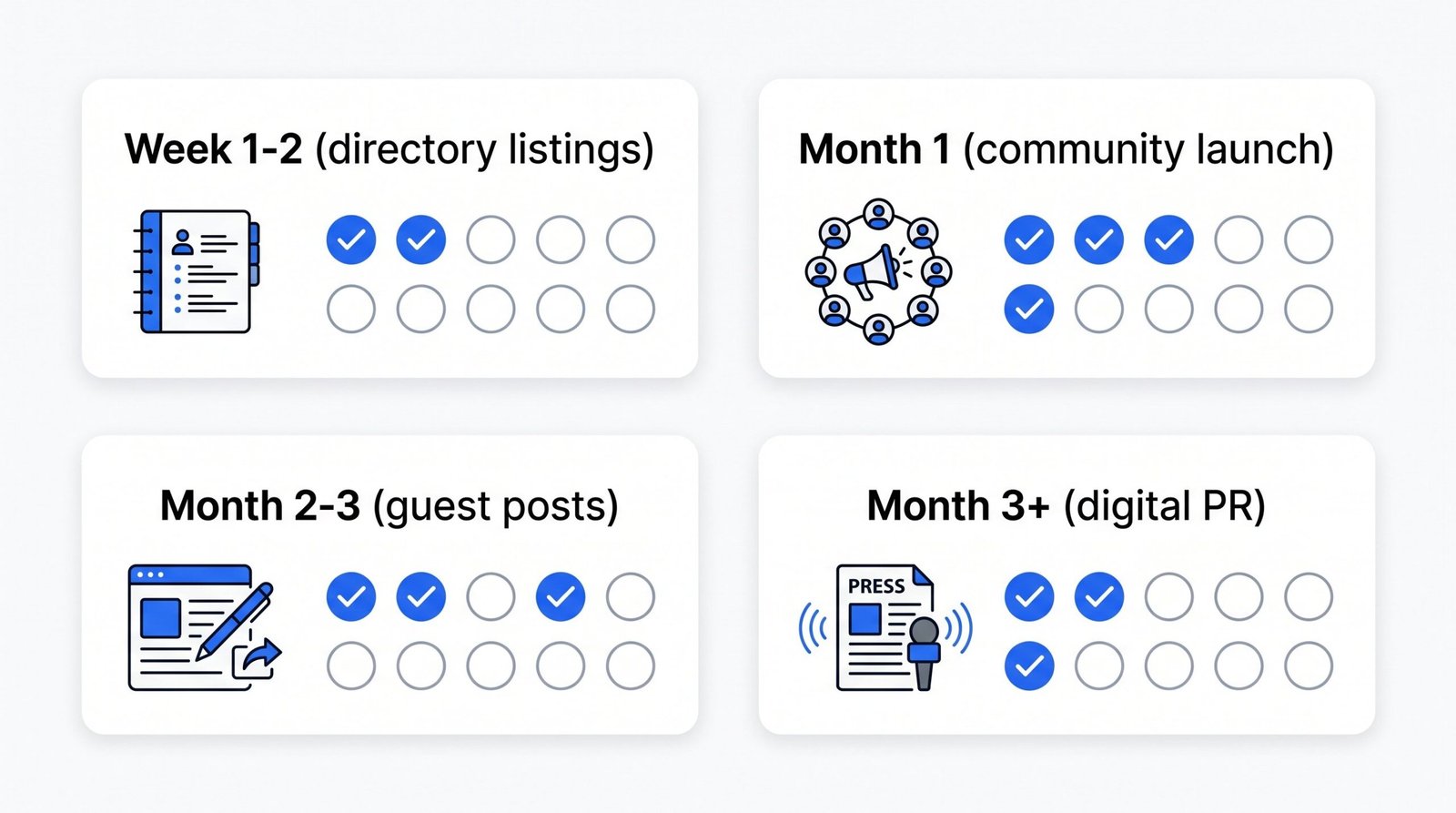
A ranked 90-day plan that any solo founder or small team can execute. This complements the broader playbook in our guide to SEO for web apps.
| Phase | Timeframe | Actions |
|---|---|---|
| Phase 1: Foundation | Week 1-2 | Claim Product Hunt, G2, Capterra, AlternativeTo, and Indie Hackers profiles. Set up Google Alerts for brand name and founder names. Verify Google Search Console. Audit existing brand mentions across the web. |
| Phase 2: Launch and Content | Month 1 | Publish first technical blog post or case study. Run Product Hunt launch. Submit Show HN post. Claim 10 additional category-specific directory profiles. Begin Reddit and dev community participation. |
| Phase 3: Outreach and PR | Month 2-3 | Pitch 1 to 2 guest posts to dev-adjacent publications. Pitch 3 relevant podcasts. Audit existing content for linkable asset opportunities. Convert any unlinked brand mentions found in Phase 1. |
| Phase 4: Scale | Month 3+ | Run digital PR around next product milestone. Complete competitor backlink gap analysis. Target 10 resource pages with personalized pitches. Build one linkable free tool or open dataset. |
Frequently Asked Questions About Off-Page SEO
What is off-page SEO in simple terms?
Off-page SEO is everything you do outside your own website to improve search rankings. It includes backlinks, brand mentions, reviews, directory listings, and any third-party signal that tells Google your site is trustworthy and authoritative. Think of it as the rest of the internet voting for your site.
How long does off-page SEO take to show results?
For a new domain, expect three to nine months before off-page work produces measurable ranking gains. Early signals like organic impression growth in Search Console can appear in 60 to 90 days, but meaningful position movement on competitive keywords usually takes six months of consistent work.
Is off-page SEO more important than on-page SEO?
Neither is more important; they multiply each other. On-page SEO makes your pages relevant to specific queries. Off-page SEO gives your domain the authority to rank for those queries. A site that wins both wins. A site strong in only one will hit a hard ceiling. For new SaaS products specifically, off-page is usually the bigger gap because most founders neglect it.
What are the most effective off-page SEO techniques for SaaS?
The highest-ROI tactics for SaaS are: claiming all relevant SaaS directory listings (G2, Capterra, Product Hunt, AlternativeTo, Indie Hackers), publishing technical content that earns natural developer links, getting reviews from real customers on third-party platforms, and pitching guest posts and podcast appearances in your category. Open-source releases and free linkable tools work exceptionally well when the product fit is right.
Do social media links count for off-page SEO?
Most social media links are nofollow, so they do not pass direct PageRank. They still matter indirectly. Social distribution drives discovery, which leads to coverage, which produces actual editorial backlinks. Treat social as a top-of-funnel channel that creates the conditions for real off-page signals, not as a direct ranking tactic.
How is off-page SEO different for mobile apps vs web apps?
Web apps focus on backlinks, directory listings, and brand mentions across the open web. Mobile apps add app store ratings and reviews as a major signal layer, since Google web search references these when ranking pages about the app. Mobile apps also benefit from coverage on app-specific sites like Android Authority and 9to5Mac, which do not factor for web-only SaaS.
What is the cheapest way to start with off-page SEO?
Directory listings cost nothing and produce the highest return for the effort in your first month. Claim Product Hunt, G2, Capterra, AlternativeTo, Indie Hackers, and the top 10 directories in your specific category. Set up Google Alerts (free) for brand mentions and convert unlinked mentions through short, polite outreach emails. Both tactics can be executed by a solo founder in under 20 hours total and produce real backlink and citation lift within 60 days.
RELATED POSTS
View all


SEO for Web Apps: A Developer’s Guide to Getting Found
May 12, 2026 | by Ian Adair

Wix SEO Guide 2026: Step-by-Step Optimization to Rank Your Wix Site
May 24, 2026 | by Ian Adair