

Link Building Strategies: The Complete Guide for App Developers and SaaS Founders (2026)
July 1, 2026 | by Ian Adair
Link Building Strategies: The Complete Guide for App Developers and SaaS Founders (2026)
Link building strategies are the deliberate methods you use to earn backlinks from other websites, signaling to search engines that your content is credible and worth ranking. The most reliable approaches include publishing linkable assets, guest posting on relevant blogs, digital PR, resource page outreach, and, for software products specifically, listings on developer directories, integration partner pages, and open source repositories.
Most articles on link building rehash the same seven or eight tactics, guest posting, skyscraper, broken link building, digital PR, without ever addressing the reality of a small SaaS team or a solo developer trying to grow a product. The context is different. The channels are different. The links that move the needle for a JAMstack API tool are not the same links that work for a local plumbing company.
This guide covers the standard playbook, but the real value sits in the middle section: a full breakdown of link building tactics that work specifically for app developers, SaaS founders, and technical solo builders. If you ship code, launch products, or build APIs, the sources of high-authority backlinks look nothing like what a generic marketing blog will tell you.
Why Backlinks Still Drive Rankings in 2026
Google has spent two decades trying to reduce the weight of links in its ranking algorithm, and links still remain one of the strongest signals it uses. According to how Google Search works, links from other pages help the crawler discover content and assess authority. A link is a vote, and the identity of who casts that vote matters more than the count.
In 2026, the story extends beyond classical search. AI answer engines like Perplexity, ChatGPT search, and Google’s AI Overviews all rely on citation signals to select which sources to quote. Sites with strong backlink profiles surface more often in AI-generated answers because those systems trust pages that other trusted pages already trust. If you want to appear as a cited source in AI answers, backlinks are still the leading input.
Zero-click search reduces referral traffic, but citation frequency now has direct commercial value. Links buy you visibility across both traditional SERPs and the new generation of answer interfaces.
What Makes a Backlink Valuable?
Not all backlinks carry the same weight. A single link from a respected domain in your niche can outperform hundreds of links from low-quality directories. Before pursuing any link, evaluate it against five factors.
Domain authority reflects how much trust a domain has accumulated. Ahrefs uses Domain Rating (DR), Moz uses Domain Authority (DA), and both correlate roughly with a site’s link profile. A DR 70+ referring domain provides significantly more ranking benefit than a DR 20 blog.
Topical relevance matters as much as authority. A link from a small niche developer blog often carries more ranking signal than a link from a generic high-DA lifestyle site. Google’s algorithm rewards contextual relevance, and AI systems weigh topic proximity even more heavily.
Anchor text is the clickable text of the link. Natural anchor profiles include a mix of branded, generic, and partial-match keyword anchors. Over-optimized exact-match anchors trigger algorithmic filters.
Do-follow versus no-follow tells search engines whether to pass link equity. Do-follow links transfer authority; no-follow links do not, though they still carry traffic and brand value. In practice, a healthy profile includes both.
Placement affects value. A link within the main body content, inside a paragraph of relevant prose, sends a stronger signal than one in a sidebar, footer, or author bio.
| Factor | What It Measures | Why It Matters |
|---|---|---|
| Domain Authority | Overall trust of the linking domain | Higher-authority domains pass more ranking signal |
| Topical Relevance | Subject overlap between linking and target page | Relevant links rank better and satisfy AI citation logic |
| Anchor Text | The clickable words used for the link | Natural anchors avoid over-optimization penalties |
| Do-follow vs No-follow | Whether the link passes ranking equity | Do-follow transfers authority; no-follow still adds trust |
| Placement | Where the link sits on the page | In-body links outperform sidebar and footer placements |
These same considerations apply whether you are pursuing a mention in a major publication or a listing on a niche SaaS directory. Understanding what constitutes a valuable link is the foundation of any serious off-page SEO program.
The Core Link Building Strategies
Before we get into the software-specific plays, let’s cover the seven approaches that form the standard toolkit. These work across industries and, when combined with the SaaS-specific tactics that follow, form a complete link acquisition system.
1. Publish Linkable Assets (Tools, Research, and Calculators)
The strongest passive link building method is creating content that other people cite because it saves them work. Original research, benchmarks, statistics roundups, interactive calculators, and free tools all belong here.
Practical steps:
- Survey your customers or run a data study on a topic your industry cares about
- Package the findings with a clear headline statistic that will get cited
- Publish charts and visualizations that other writers can embed with attribution
- Create a shareable URL structure like /research/state-of-x-2026
- Reach out to journalists and bloggers who cover the space
A single well-cited study can earn 200 to 2,000 backlinks over its lifetime. Ship one linkable asset per quarter and treat it as a core marketing deliverable, not a side project.
2. Guest Posting on Developer and Tech Blogs
Guest posting still works when you focus on relevance over volume. The goal is not to place articles on hundreds of low-quality sites. It is to publish thoughtful, original pieces on three to five publications your target customer already reads.
Steps to run guest posting properly:
- Build a list of 20 to 30 blogs in your niche using a tool like Ahrefs or Semrush
- Filter for sites with genuine traffic (not just high DR) and active editorial calendars
- Study three to five of their recent posts to understand tone, length, and structure
- Pitch a topic that fits a gap in their existing coverage
- Include one contextual link back to a relevant piece on your site, ideally in the body
The value of a guest post depends heavily on the site. A single post on a respected engineering blog outweighs dozens of contributions on generic content farms.
3. Broken Link Building
Broken link building finds dead links on other people’s pages and offers your content as a replacement. The pitch works because you are helping the site owner fix a real problem.
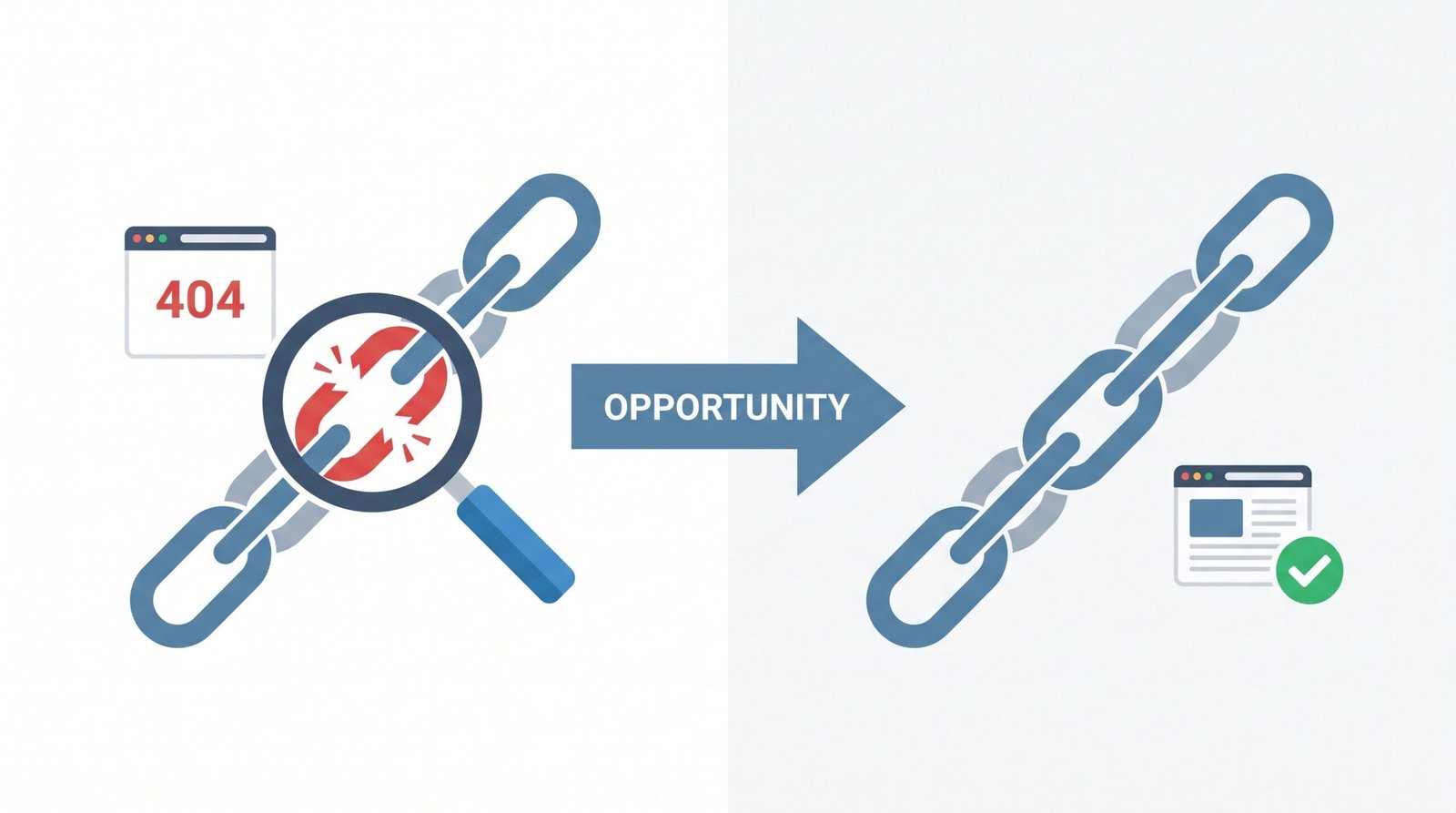
How to execute:
- Find resource pages, roundups, or long guides in your niche
- Use a browser extension like Check My Links or the Ahrefs broken link report to identify 404s
- Verify the dead URL was on a topic you have content for
- Email the site owner with a short note pointing out the broken link and suggesting yours as a fix
Expect a 5 to 15 percent reply rate and a lower conversion rate to actual links. Volume matters here, but never at the cost of relevance.
4. Digital PR and Original Research
Digital PR is the practice of earning coverage in mainstream publications through newsworthy stories. For SaaS founders, this often means publishing surveys, industry reports, or contrarian data pieces that journalists want to cover.
What works:
- Novel data others have not published (survey your users)
- A clear angle that fits an ongoing news cycle
- A press-ready summary with charts, quotes, and a clear headline number
- Direct pitches to five to ten journalists who cover the beat
One well-executed digital PR campaign can generate 30 to 100 backlinks in a week, many from DR 80+ publications. The upfront cost is high (the research takes time), but the compound effect on your SaaS SEO strategy is substantial.
5. Unlinked Brand Mention Outreach
Your brand gets mentioned in articles, forum posts, and community threads all the time. Most of those mentions do not include a link back to your site. Recovering them is one of the highest-yield activities in link building.
The process:
- Set up a Google Alert (or a Mention.com feed) for your brand name and product name
- Each week, review new mentions and check which ones do not link to your site
- Email the author, thank them for the mention, and ask if they would add a link
Conversion rates on this outreach can hit 40 percent because the author has already voluntarily written about you. Adding a link takes them 20 seconds.
6. Resource Page Link Building
Resource pages are curated lists of tools, guides, or references on a specific topic. Universities, industry associations, and niche blogs all maintain them. If your product or content fits the theme, you can pitch to be added.
Steps:
- Search Google for phrases like “best [your niche] tools” or “[topic] resources” inurl:resources
- Identify pages where your content clearly belongs
- Send a brief, respectful email explaining what you offer and why it fits
Resource page links tend to be topically relevant and stable, and they often sit on pages with years of accumulated authority.
7. Competitor Backlink Replication
Every competitor’s backlink profile is a shopping list of opportunities. If a blog wrote about them, that blog might write about you. If a directory listed them, that directory almost certainly accepts your product too.
How to run this:
- Enter three to five competitor domains into Ahrefs Site Explorer or Semrush Backlink Analytics
- Export the referring domains list
- Filter for links that are gettable (directories, roundups, resource pages, guest posts)
- Reach out systematically, offering your product or content as a comparable or better fit
This is the fastest way to build a baseline backlink profile for a new product. Ninety percent of the sites already trust competitors in your category, which reduces the pitch friction.
App and SaaS-Specific Link Building Tactics
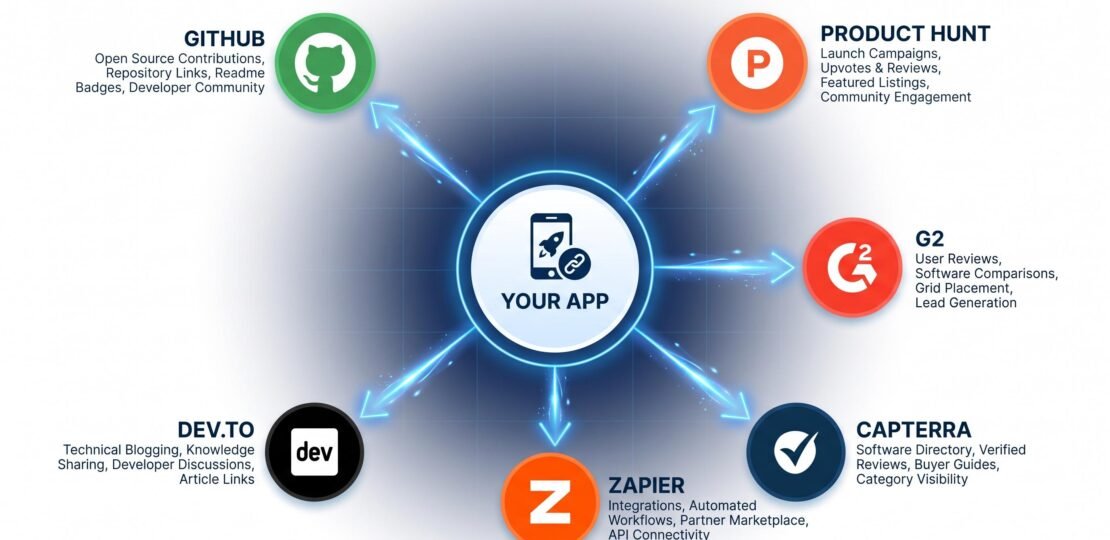
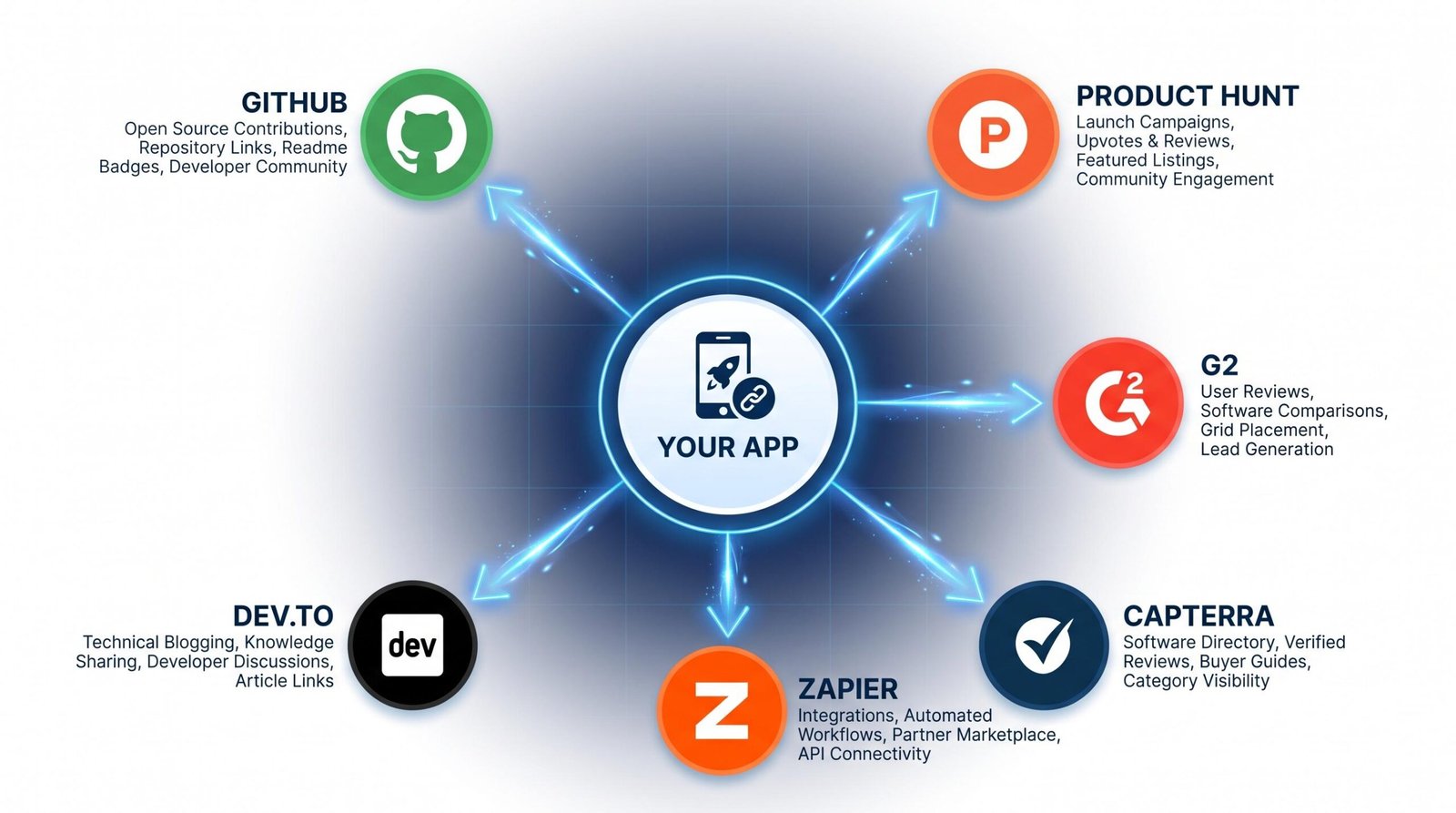
Here is where most link building guides stop being useful. If you are building software, several link sources exist that generic marketing writers never mention, because they do not know they exist. These channels are where high-authority backlinks accumulate for real developer and SaaS products.
8. GitHub Repositories and Open Source Projects
GitHub is one of the most under-appreciated link building surfaces in existence. Every popular repository accumulates links from README files, package registries, documentation sites, blog posts, and dependent projects. If you publish an open source project, you are creating a link magnet that keeps earning links long after you stop working on it.
Concrete plays:
- Open source a library, CLI, or utility related to your commercial product
- Put your product URL in the repository description and README
- Include a link to your homepage in the package.json, Cargo.toml, or setup.py
- Publish a companion blog post explaining the design decisions
- Submit the repo to weekly newsletters like JavaScript Weekly, Ruby Weekly, or Python Weekly
A single well-received open source project can accumulate several hundred backlinks from dependent projects alone. Every fork, star, and reference in someone else’s README compounds the signal. This is especially powerful when combined with a strong developer SEO guide approach that connects the open source work back to your commercial offering.
9. Product Hunt and Launch Platform Links
A Product Hunt launch does more than deliver a traffic spike. It generates a durable backlink cluster: the product listing itself, the maker page, the collection pages your product appears in, and the many blog posts and roundup articles that cover Product Hunt launches every week.
What to do:
- Schedule a Product Hunt launch when your product has real polish
- Coordinate a launch on BetaList, Indie Hackers, and Hacker News the same week
- Cross-promote to smaller launch communities: MicroLaunch, Uneed, Startup Base, Fazier
- Follow up with roundup writers who cover “best launches of the week”
Expect 20 to 60 backlinks from a well-executed launch week, with several coming from DR 80+ domains. The Product Hunt listing itself is a permanent citation from a highly trusted domain.
10. SaaS Directory and Tool Listing Links
Software directories are one of the fastest ways to build 30 to 50 relevant, high-authority backlinks for a new product. Most founders skip these because listing a product feels tedious. That inefficiency is why the strategy still works.
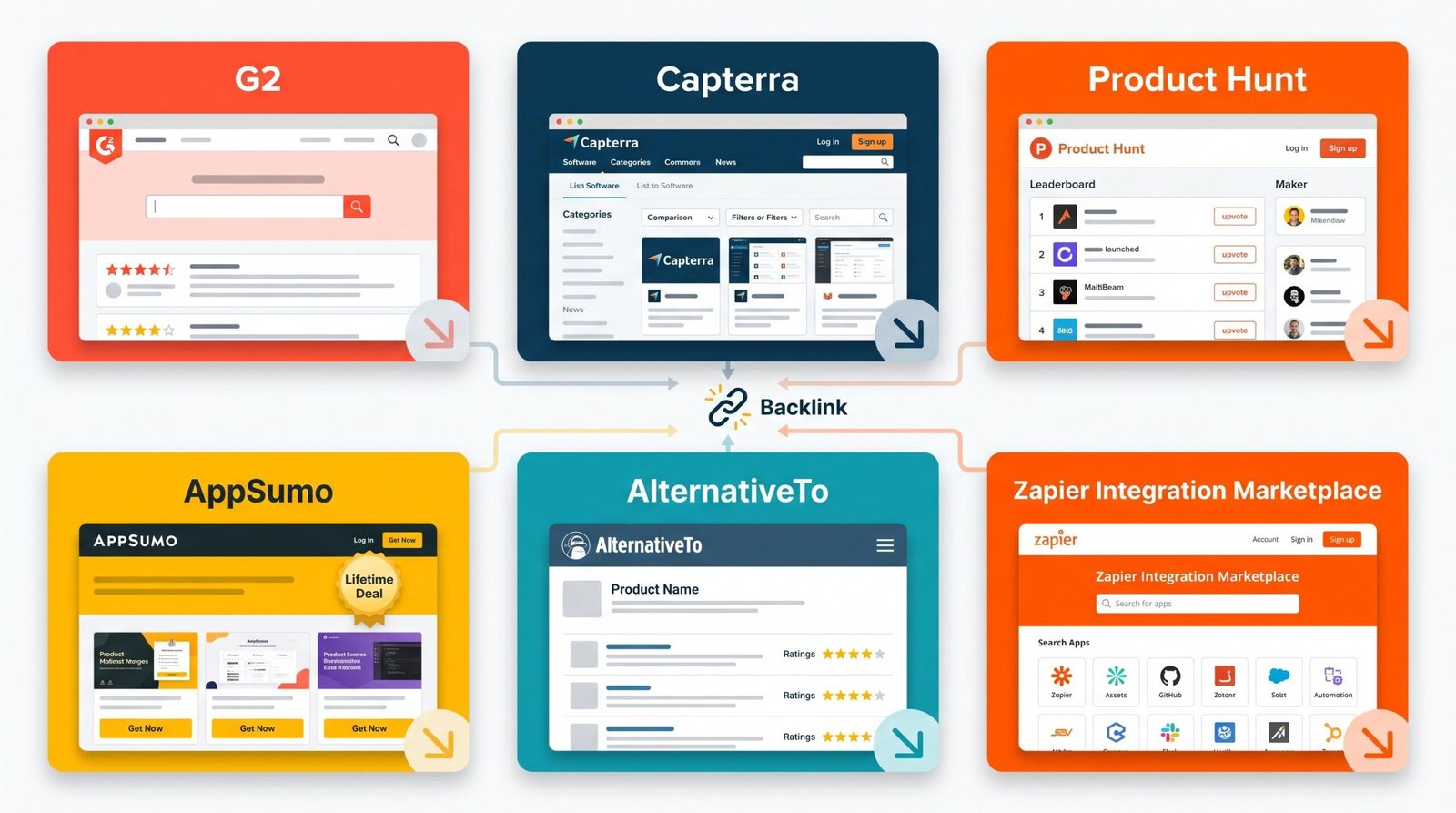
Target directories by category:
- Review platforms: G2, Capterra, GetApp, Software Advice, TrustRadius
- Alternative discovery: AlternativeTo.net, Slant, StackShare
- Deals and lifetime deals: AppSumo, StackSocial, PitchGround
- General SaaS lists: SaaSHub, Product Hunt Alternatives, Startup Stash, Beta List
- Category-specific: for design tools try Toolbox for Designers, for AI try FutureTools
Each of these sits at DR 60 to 90. Most are free to submit. A single evening spent creating listings can add 15 to 25 backlinks to a new product, with strong topical relevance to boot.
11. Integration Partner Links
If your product integrates with major platforms, the integration listings themselves are backlinks. Zapier, Make.com (formerly Integromat), Pipedream, n8n, Segment, and every other iPaaS platform maintains a directory of integrations, each of which links back to the partner’s site.
Steps to unlock this:
- Build integrations with the three to five platforms your customers use most
- Complete the partner listing process (Zapier’s public directory, Make’s app portal, and so on)
- Get listed in each platform’s app store or template gallery
Zapier alone has a DR of 94. A listing there is worth more than dozens of guest posts on unknown blogs. Every SaaS with a public API should treat integration listings as a first-class link building channel.
12. NPM Package and Developer Documentation Links
Developers link to the packages they use. If your product has any developer-facing surface at all (an SDK, a CLI, a library, a webhook helper), publishing packages to NPM, PyPI, RubyGems, or Cargo creates a permanent link source.
Beyond the registry link itself, packages get referenced from tutorials, Stack Overflow answers, GitHub Gists, and other developers’ repositories. Documentation sites also earn links naturally: readthedocs.io, GitBook, and Docusaurus-hosted docs frequently appear on external pages.
What to publish:
- An official SDK for your API in the top two or three languages your customers use
- Helper utilities that make integration easier
- Example projects and starter templates on GitHub
Every registry listing includes a homepage field. Fill it with your product URL, not a placeholder. Each new install of your package that appears in a public repository indirectly contributes to your backlink profile.
13. Developer Community Posts (dev.to, Hacker News, Reddit)
Developer communities are a link source that generic SEO writers do not understand. A well-written dev.to post can attract dozens of secondary citations. A successful Show HN thread often results in three to ten blog posts that reference the discussion.
Playbook:
- Publish technical deep-dives on dev.to and Hashnode with canonical URLs pointing to your own blog
- Post genuine Show HN entries on Hacker News for meaningful releases
- Contribute substantive answers on Stack Overflow that reference your product only where genuinely useful
- Share projects and updates on subreddits like r/webdev, r/SaaS, r/sideproject, r/programming (only where community rules allow)
These posts often get picked up by newsletters (Hacker Newsletter, Console, TLDR) which are themselves high-authority link sources. A single trending Hacker News post can generate 30+ backlinks over the following month.
14. AI Tool Directory Links
If your product has any AI or LLM component, an entire ecosystem of AI-specific directories exists that most competitors have not exploited. These directories launched between 2022 and 2025 and are still accepting submissions eagerly.
The main AI directories worth targeting:
- Theresanaiforthat.com (DR 85+)
- Futurepedia.io (DR 80+)
- There.is/ai
- AIToolsDirectory.com
- Toolify.ai
- Insidr.ai
- FutureTools.io
Submitting a product to all of these takes about two hours and yields 10 to 15 durable backlinks from AI-topical domains. The topical relevance is high, which matters for AI-related keyword rankings and for AI answer engine citation.
15. Build a Free Tool (The Link Magnet Strategy)
The single most reliable long-term link building strategy for a technical founder is to build a free tool. Developers and bloggers link to free tools constantly, because they solve real problems for their readers and require no commitment from the person doing the linking.
Free tool ideas that earn links:
- Format converters (JSON to YAML, Markdown to HTML, timezone converters)
- Calculators (SaaS pricing, MRR, ROI, retention cohorts)
- Checkers (a schema validator, a robots.txt tester, an SSL checker)
- Generators (Lorem Ipsum, favicons, meta tags, sitemap files)
- Analyzers (a page speed lite check, a Core Web Vitals reporter)
A well-executed free tool sits on the first page of Google for its target keyword and earns 5 to 30 backlinks per month once it ranks. The compounding effect over 12 to 24 months is significant. When you pair the tool with a solid technical foundation and healthy Core Web Vitals, the ranking sticks and the links keep arriving.
The reason this works: bloggers write listicles like “50 free tools for developers” every week. Your job is to build something worth being on that list.
Link Building Strategy Comparison Table
Not every tactic fits every stage. This table summarizes how each strategy compares on the metrics that matter when you are deciding where to invest your time.
| Strategy | Time to First Link | Effort Level | Link Quality | Best For |
|---|---|---|---|---|
| Linkable Assets | 4 to 12 weeks | High | Very High | Established products with research budget |
| Guest Posting | 2 to 6 weeks | Medium | Medium to High | Products in content-heavy niches |
| Broken Link Building | 2 to 4 weeks | Medium | Medium | Products with existing evergreen content |
| Digital PR | 3 to 8 weeks | High | Very High | Products with unique data or angles |
| Unlinked Mentions | 1 to 2 weeks | Low | High | Products with existing brand presence |
| Resource Pages | 2 to 4 weeks | Low | Medium to High | Products in defined niches |
| Competitor Replication | 2 to 6 weeks | Medium | Medium to High | Products entering established markets |
| Open Source / GitHub | 1 to 4 weeks | High | Very High | Developer tools and dev-facing SaaS |
| Product Hunt Launch | Launch week | Medium | High | Consumer-facing and prosumer products |
| SaaS Directories | 1 to 2 weeks | Low | Medium to High | Any SaaS product |
| Integration Partners | 4 to 12 weeks | High | Very High | SaaS with public APIs |
| NPM / Package Registries | 1 week | Medium | High | Developer-facing products |
| Dev Community Posts | 1 to 2 weeks | Medium | Medium to High | Products with technical depth |
| AI Tool Directories | 1 to 2 weeks | Low | Medium | AI-powered products |
| Free Tools | 3 to 12 months | High | Very High | Any product with a technical team |
How to Build Your First 10 Backlinks (Step-by-Step)
If you have shipped a product recently and your backlink profile is empty, here is the exact sequence to follow. It uses low-friction, high-yield tactics and can be completed in one to two weeks.
- Publish to G2, Capterra, and GetApp. Free listings, DR 90+ each. Total time: two hours.
- Submit to AlternativeTo.net and Slant. Alternative-discovery directories with strong topical relevance. Time: 30 minutes.
- Launch on Product Hunt with a coordinated Beta List and Hacker News post. Even a moderate launch generates six to twelve links. Time: half a day of prep.
- List on SaaSHub, Startup Stash, and Beta List. Free, straightforward submissions. Time: 45 minutes.
- Publish an SDK on NPM (or PyPI). Put your product URL in the package homepage field. Time: two to four hours if the SDK is minimal.
- Open source one small utility on GitHub. A CLI, helper library, or example project related to your product. Time: half a day.
- Write a technical dev.to post about a real problem you solved, canonical URL pointing to your blog. Time: three hours.
- Get listed on two AI directories (if your product has AI features). Time: 30 minutes.
- Reach out to five bloggers who reviewed a competitor and pitch a comparison feature. Time: 90 minutes.
- Complete integration partner listings on Zapier and one other iPaaS platform. Time: varies, but each is worth the effort.
Executed properly, this sequence delivers 15 to 30 backlinks in your first month, most of them from domains at DR 60 or higher. That baseline is enough to start ranking mid-competition keywords, especially when paired with solid on-page SEO and a clean technical foundation.
Link Building Tools We Suggest
The tooling landscape has consolidated. A few options cover most of what a small team needs for link research, outreach, and monitoring.
Ahrefs is the most complete backlink database. Site Explorer, Content Explorer, and the broken link report are the most useful features for link building specifically. Pricing starts around $129 per month.
Semrush offers a comparable Backlink Analytics tool with a broader marketing suite. If you want backlink analysis plus keyword and PPC data in one subscription, Semrush is the practical pick.
Moz Link Explorer remains a solid, budget-friendly option, particularly for teams that already use Moz for other SEO needs. Its Domain Authority score is widely referenced.
Hunter.io is the standard for finding email addresses when running outreach at scale. It integrates with most CRM and email tools.
For a free option, Google Search Console shows the backlinks Google has indexed for your own site. It’s not as complete as Ahrefs, but for a solo founder starting out, the price and reliability are hard to beat. Pair it with the best SEO tools roundup to build a stack that fits your budget.
Mistakes to Avoid
Every link building program can be undone by a few classic mistakes. Skip these.
Buying links. Google’s Google Search Essentials explicitly prohibit paid links that pass PageRank. Paid link networks (PBNs) still exist, but Google’s spam detection has improved to the point where the risk of penalty is high and the yield is low. Do not buy links.
Link farms and low-quality directories. Any directory that lists every submission without editorial review is worthless at best and toxic at worst. If you would not want a customer to see the site, do not accept a link from it.
Exact-match anchor text spam. If half of your inbound links use the anchor text “best CRM software,” Google will flag your profile as manipulated. Aim for a natural anchor distribution: mostly branded and generic anchors, with keyword-rich anchors as a minority.
Link velocity spikes. Going from ten backlinks to five hundred in a week is a red flag. Real link acquisition follows a gradual curve. If you run a digital PR campaign that spikes your profile, that’s fine, the pattern is explainable, but you should not fake velocity through purchased links.
Ignoring link quality. Ten strong links beat a thousand weak ones. Time spent on a single G2 review or a single guest post at a top publication returns far more than the same time spent chasing volume from low-authority sources. Pair your link work with a proper technical SEO audit to make sure the links you earn have a healthy site to land on.
Frequently Asked Questions
What are the most effective link building strategies in 2026?
The most effective link building strategies in 2026 combine linkable assets (original research, free tools, calculators) with targeted outreach (guest posting, digital PR, unlinked mentions) and, for software products, directory and integration partner listings. Passive link acquisition through open source and free tools tends to compound better than one-off outreach campaigns, but a healthy program mixes both.
How long does link building take to show results?
Expect three to six months before backlink acquisition translates into visible ranking improvements. Google needs to crawl and evaluate new links, and the ranking algorithm smooths signals over time to avoid rewarding manipulation. Some effects appear faster (a big digital PR hit can move rankings within weeks), while broader authority building is measured in quarters, not weeks.
Is guest posting still an effective link building strategy?
Guest posting still works when done selectively. The old model of publishing on hundreds of low-quality sites is dead. What still works is placing thoughtful, original articles on three to five relevant, high-traffic publications your target customer already reads. Focus on relevance and audience overlap, not raw domain metrics.
How do I build links for a brand-new SaaS or app product?
Start with fast, low-friction wins: submit to SaaS directories (G2, Capterra, AlternativeTo, SaaSHub), plan a coordinated launch on Product Hunt and Beta List, publish an NPM or PyPI package if you have a developer-facing product, and open source a small utility on GitHub. This sequence typically yields 15 to 30 backlinks in the first month, enough to escape the sandbox and start ranking mid-competition keywords.
What is the difference between white hat and black hat link building?
White hat link building earns links through methods Google’s guidelines permit: publishing quality content, doing genuine outreach, participating in communities, and building products people naturally reference. Black hat link building manipulates rankings through methods that violate the guidelines: buying links, private blog networks, comment spam, hidden links, and automated outreach at scale. White hat approaches build durable authority. Black hat approaches carry penalty risk and diminishing returns.
How many backlinks do I need to rank on the first page?
The answer depends entirely on the keyword. For a low-competition long-tail phrase, ten to twenty relevant backlinks may be enough. For a competitive commercial keyword, you may need several hundred referring domains from authoritative, topically relevant sites. The right way to estimate is to analyze the top ten ranking pages for your target keyword and match their backlink profile in both quantity and quality.
What link building tools should solo founders use?
A solo founder can run an effective link building program with Ahrefs or Semrush (pick one), Hunter.io for outreach, and Google Search Console for monitoring backlinks Google has indexed for your site. If budget is tight, start with the free Ahrefs Webmaster Tools, Google Search Console, and manual research. The tools matter less than the discipline of doing outreach consistently every week.
Link building compounds. The founder who ships a free tool, submits to twenty directories, opens a GitHub repository, and runs outreach every week for six months ends up with a backlink profile that a competitor cannot replicate quickly. Combine these tactics with strong SEO for web apps fundamentals and the results build on themselves for years.
RELATED POSTS
View all


SEO for SaaS: A Practical Guide for Solo Founders and Small Teams (2026)
May 12, 2026 | by Ian Adair